Recycling and Sustainability with House Clearance Cole
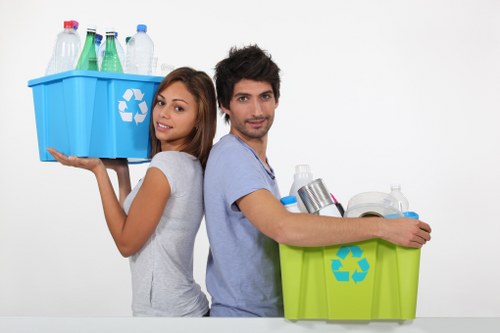 House Clearance Cole is committed to delivering responsible, low-impact clearances across the local area. As a leading Cole house clearance service we prioritise reuse, recycling and the careful diversion of waste away from landfill. Our approach blends rigorous on-site sorting with partnerships across the boroughs so that every item is evaluated for repair, donation or material recycling before disposal.
We have set a clear recycling percentage target: 85% of all materials removed will be recycled, reused or repurposed by 2028. That target covers furniture, textiles, wood, metals, electronic waste and household recyclables. To reach it we combine trained clearance teams, documented separation practices and continuous reporting so clients know how much of an estate or property clearance is being diverted from landfill.
 In practice we work with the boroughs’ approaches to waste separation and local transfer stations to ensure compliance with municipal sorting rules. Typical recycling streams we handle include:
- paper, card and mixed recyclables collected under local council schemes
- glass and rigid plastics separated where borough policy requires
- food waste and compostable material forwarded to appropriate organic facilities
- electronics (WEEE), batteries and light fittings disposed of via licensed routes
How our local transfer station network supports Cole house clearance
We use a network of licensed transfer stations and municipal facilities to process separated loads quickly and transparently. By delivering sorted streams to authorised sites we reduce contamination rates and increase the proportion of material that can be recycled or reclaimed. Our logistics team plans routes so that collections from each borough are delivered to the most appropriate facility — whether a council-operated transfer station or a specialised recycling hub.
 Partnerships with charities and social enterprises are central to our reuse-first philosophy. Many items recovered during clearances — sofas, tables, wardrobes, careful household items and usable electricals — are offered to local charities, furniture banks and community reuse centres. These partnerships help keep items in circulation, support local people in need and reduce the carbon footprint associated with manufacturing new products.
Our Cole clearance teams maintain a catalogue process for higher-value or reusable items, coordinating collection by charity partners and social enterprises. When donation isn’t possible, we prioritise material separation so wood, metals and textile fibres are sent to specialist recyclers rather than being incinerated or landfilled.
Low-carbon vans, route optimisation and sustainable operations
We are actively decarbonising our fleet. Our low-carbon vans include battery-electric vehicles and modern hybrid models that reduce tailpipe emissions on each job. In addition, we trial renewable fuels where appropriate and fit our larger vehicles with emission-limiting technologies. The fleet upgrade forms part of our broader carbon reduction plan aimed at lowering scope 1 emissions associated with house clearance in Cole and surrounding areas.
 Route optimisation and load consolidation further reduce fuel use: by grouping jobs geographically and scheduling transfers to nearby authorised sites we cut mileage and emissions. Our drivers are trained to use eco-driving techniques and to report opportunities to increase reuse and reduce unnecessary transport of waste.
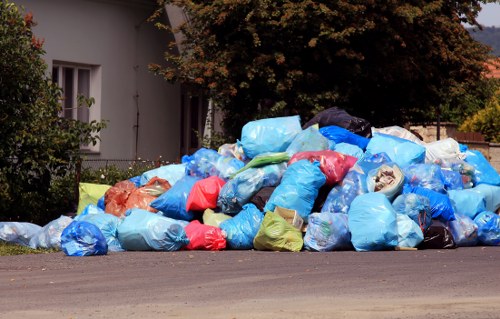 Sustainable materials handling is supported by on-site segregation kits and clear labelling so that materials are not contaminated at source. For example, in boroughs that require separate food waste collection we operate distinct containers and train crews to keep organic streams free from recyclable contamination. That careful separation increases recovery rates and helps local councils meet their recycling standards.
We also manage challenging streams responsibly: hazardous household waste and items containing asbestos or controlled chemicals are isolated and transferred to licensed treatment centres. Electrical goods are logged and routed through approved WEEE channels, while metals and timber are baled or palletised for efficient onward processing. All these steps combine to support our measurable recycling goal and the wider environmental aims of house clearance in Cole and neighbouring boroughs.
Transparency is important to us. When you book a Cole house clearance we provide a summary of how materials were handled and the share of material diverted from landfill. Our teams aim to maximise reuse and work with local community groups so that usable items are redirected into the circular economy wherever possible rather than being discarded.
By combining an 85% recycling and reuse target, partnerships with charities and licensed transfer stations, and a low-carbon vehicle fleet, our House Clearance Cole service delivers practical sustainability outcomes. We continually review performance, adapt to borough-level waste separation policies, and invest in cleaner transport and better sorting to ensure that clearances leave a minimal environmental footprint while supporting local communities.